

Claude Monet in the Garden
Haystacks and poplars, Gothic cathedrals and Venetian views. After exploring several of Monet's most prominent series, we finally turn to his beloved garden at Giverny.

This is the fourth essay in Claude Monet: The Art of the Series.
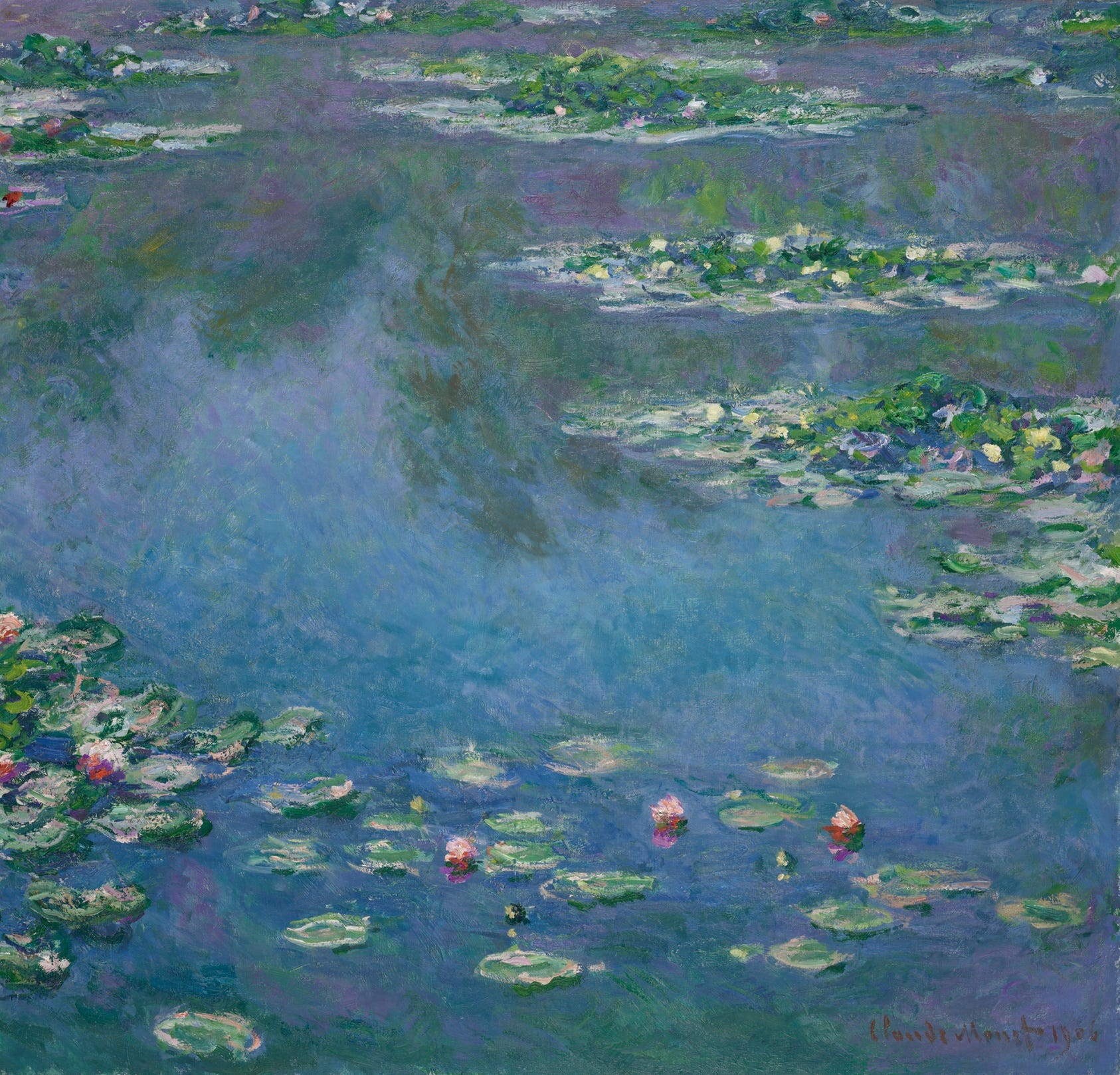
Claude Monet moved to the house in Giverny in 1883.
The people of Giverny, a small village in Normandy, were no doubt scandalized by the artist’s living arrangements. His wife Camille had passed away in 1879, and his mistress Alice Hoschedé now resided with Monet and all of their children from their separate marriages. To make matters worse, Alice’s husband, the former department store magnate Ernest Hoschedé, was still alive. (For some years, the Monets and the Hoschedés all lived together after Ernest went bankrupt in 1877. In a rather peculiar arrangement, Alice nursed Camille before she died at the age of thirty-two.)
Monet chose the property in Giverny as a place in which the families could settle after years of instability. He would be a renter in the beginning; it wouldn’t be until after the success of his Haystacks and Poplars series that he could purchase and expand the property. Nevertheless, the home quickly became a refuge, and Monet would live there until his death in 1926.
The day after Monet, Alice, and their children moved from Poissy to Giverny, they received terrible news from Paris: Édouard Manet was dead. Monet rushed to the city for the funeral, in which he served as a pallbearer alongside Antonin Proust, Émile Zola, and other prominent Parisians. Among those who attended were Monet’s fellow Impressionists, including Camille Pissarro, Berthe Morisot, and Paul Cézanne. Manet’s death marked the beginning of the end for the group’s cohesion, even though Manet never really considered himself to be an Impressionist. Some of the artists moved further from Paris—Monet, of course, had found Giverny, Alfred Sisley moved to Saint-Mammès, Pissarro to Eragny, and Cézanne increasingly remained in the South of France. The painters and their network of friends tried to meet once per month for dinner in Paris, but these get-togethers grew increasingly sporadic.1
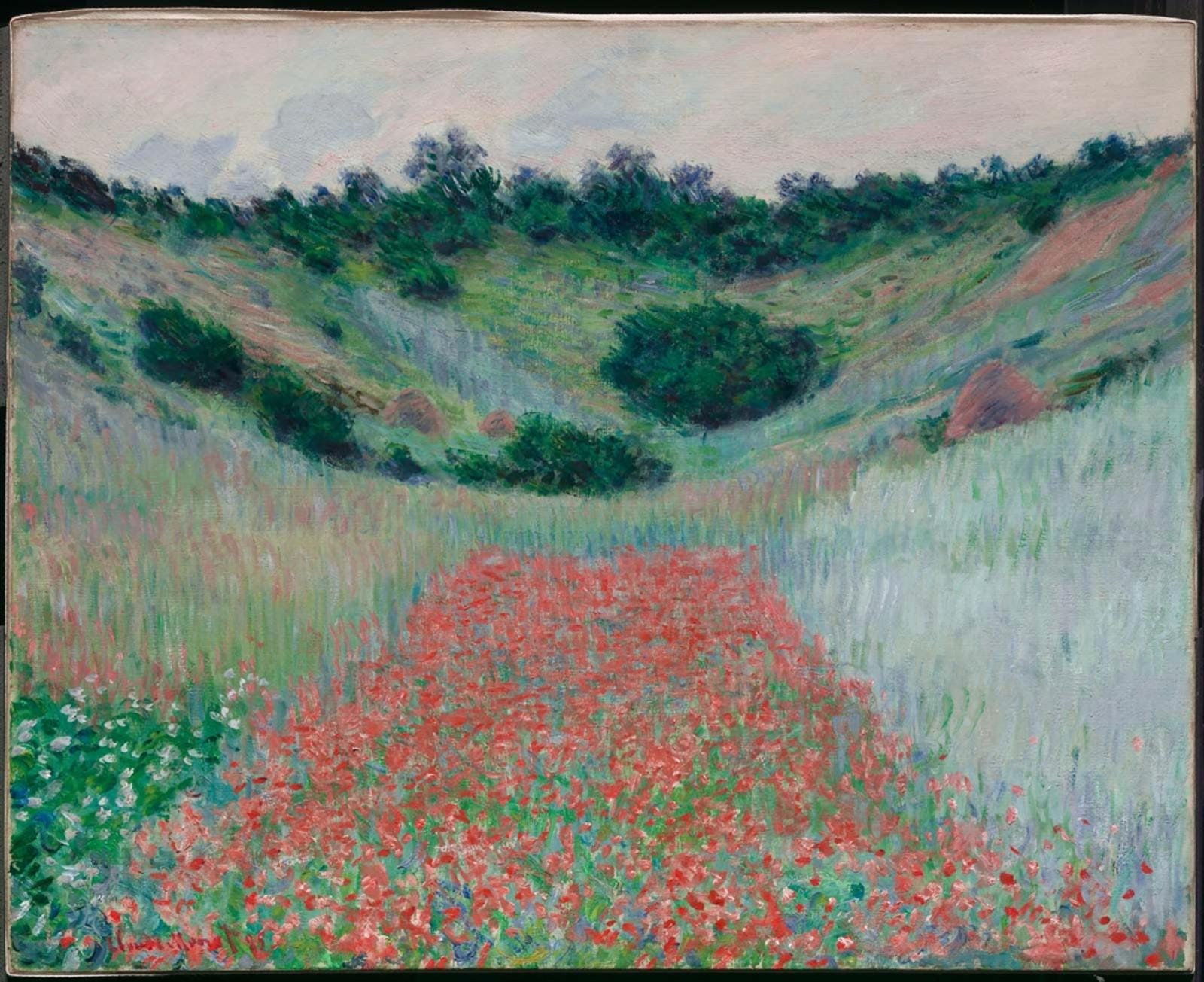
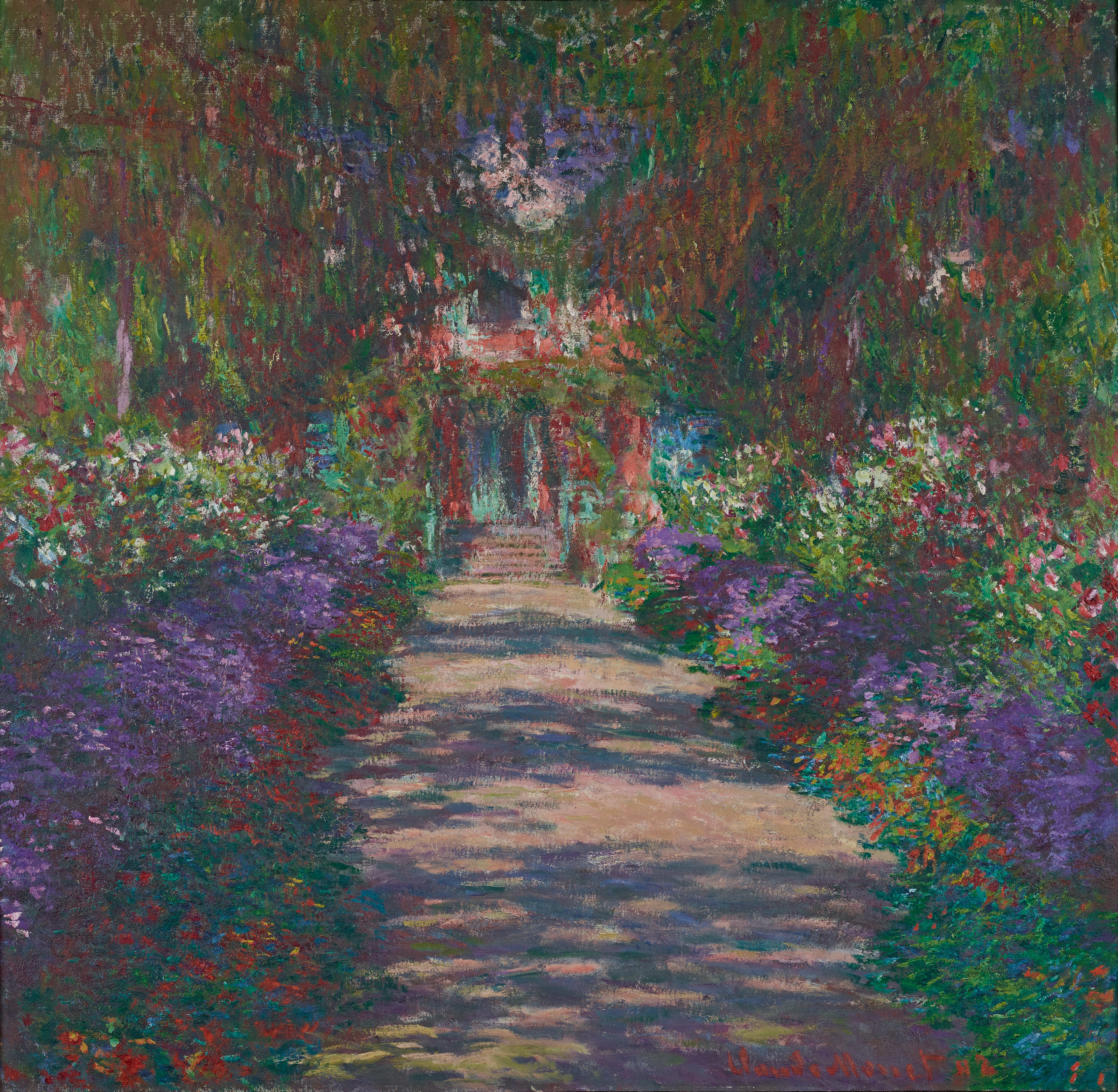
When he wasn’t traveling, Monet devoted himself to his garden. The artist was fastidious in its execution, and the result was (dare I say?) as brilliant a work of art as any of his paintings. He carefully arranged each planting scheme, laying out borders to maximize the visual effect of the blooms’ myriad hues. As his fortunes improved, he was able to purchase plants from faraway lands, such as tuberoses from Mexico or bamboo from China. The art critic Arsène Alexandre wrote of the impact of visiting Monet and his garden:
Wherever one turns, at one’s feet or head or at chest height there are pools, chains of flowers, blossoming hedges at once wild and cultivated, changing with the seasons, ever becoming new.2
The property grew with Monet’s success. In 1892, Monet married Alice (following the death of Ernest), and they were able to buy not just the original property but the adjacent field. Monet decided to convert the field into a water garden, including his famous water-lily pond. In 1895, he installed an arched wooden bridge inspired by those found in Edo-era Japanese prints.3 (Readers might remember from my Impressionism series that the artists took great interest in ukiyo-e, as Japanese artists incorporated vibrant pigments into their works.)
Thus, Monet would embark on his most extensive series, complete with over 250 oil paintings.
Monet spent the last thirty years of his life documenting his water-lily pond. Unlike his Rouen Cathedral or Houses of Parliament series, which were painted in a span of several years each, we have three decades of Giverny paintings to enjoy. Therefore, one can clearly see the evolution of his style throughout this series, especially as his eyesight began to decline.
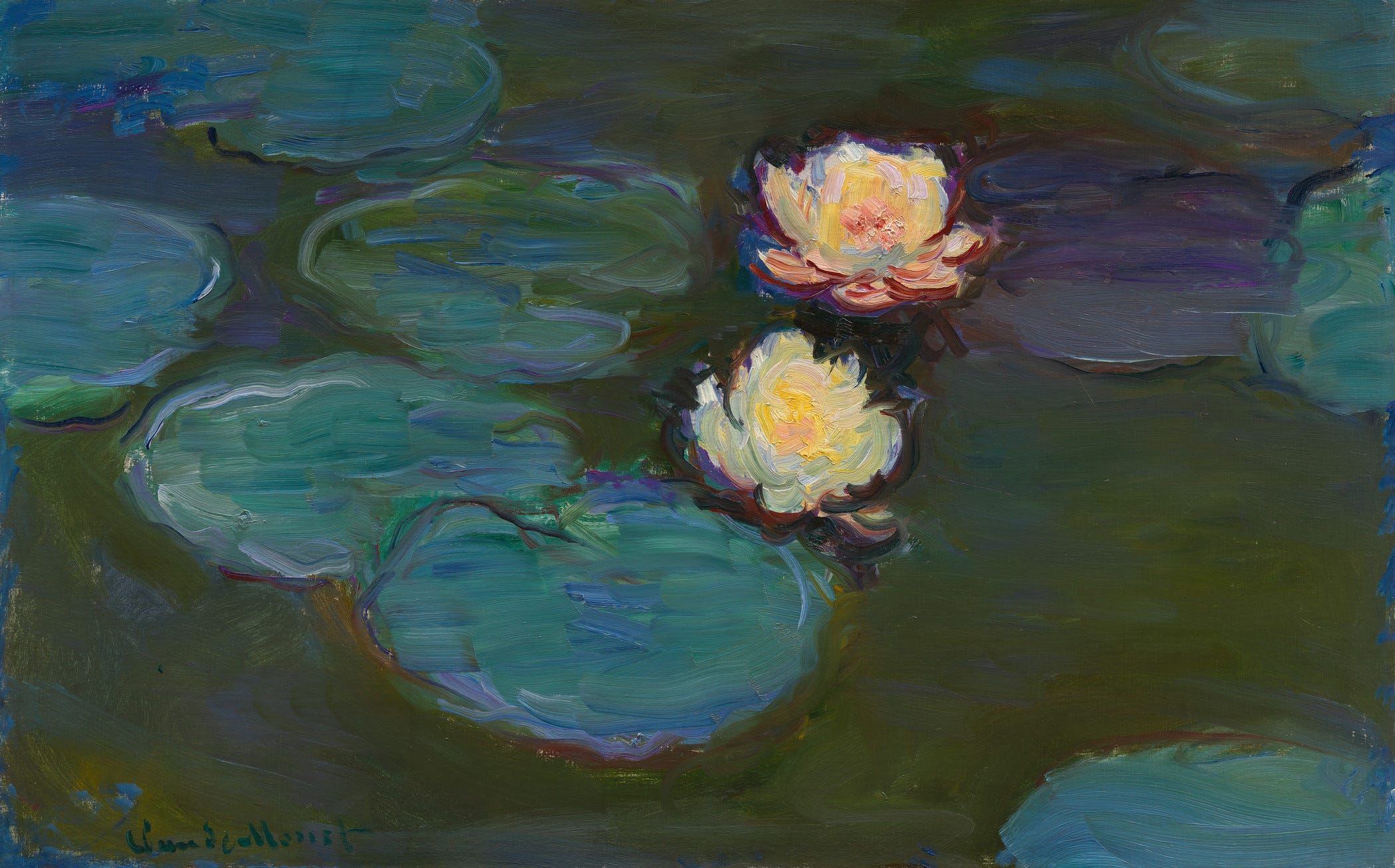
His early Water Lilies were closely-framed images of the flowers at different times of day. At this point in his career, he would paint much of each work en plein air but finish the piece in his studio, and he would continue to work this way for the remainder of his life. These early paintings reveal little of their surroundings, something that would change as the series evolved. Color and light are the focus of these Water Lilies—a pure, distilled impression.
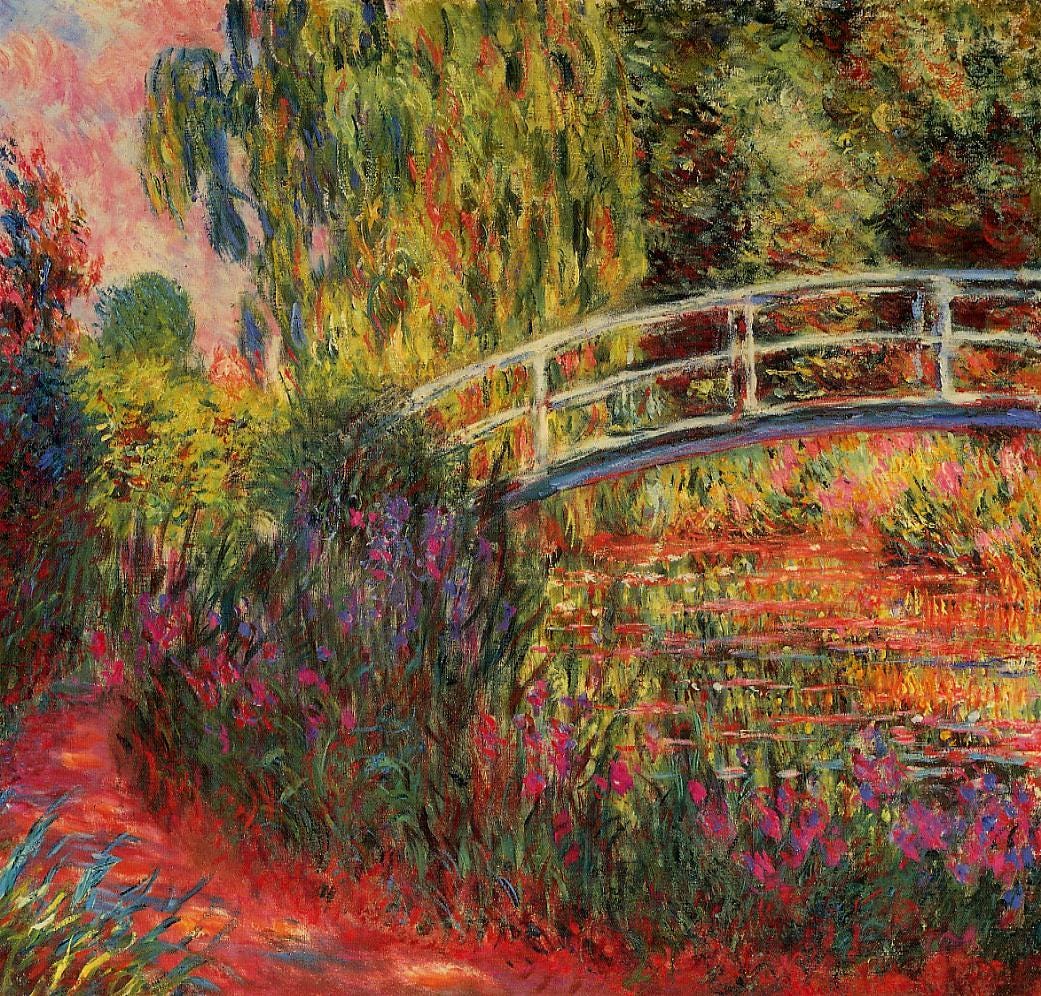
At the turn of the century, Monet began painting larger scenes surrounding the water lilies, showing the viewer the pond’s environment. These works included the Japanese bridge hovering over the pond, with willows and irises and reeds reflecting off of its water. When we close our eyes and imagine the garden at Giverny, this is the vision that comes to mind. Like his Haystacks, Monet painted this scene in different seasons, sometimes in fiery amber and crimson, sometimes in the green of early summer.
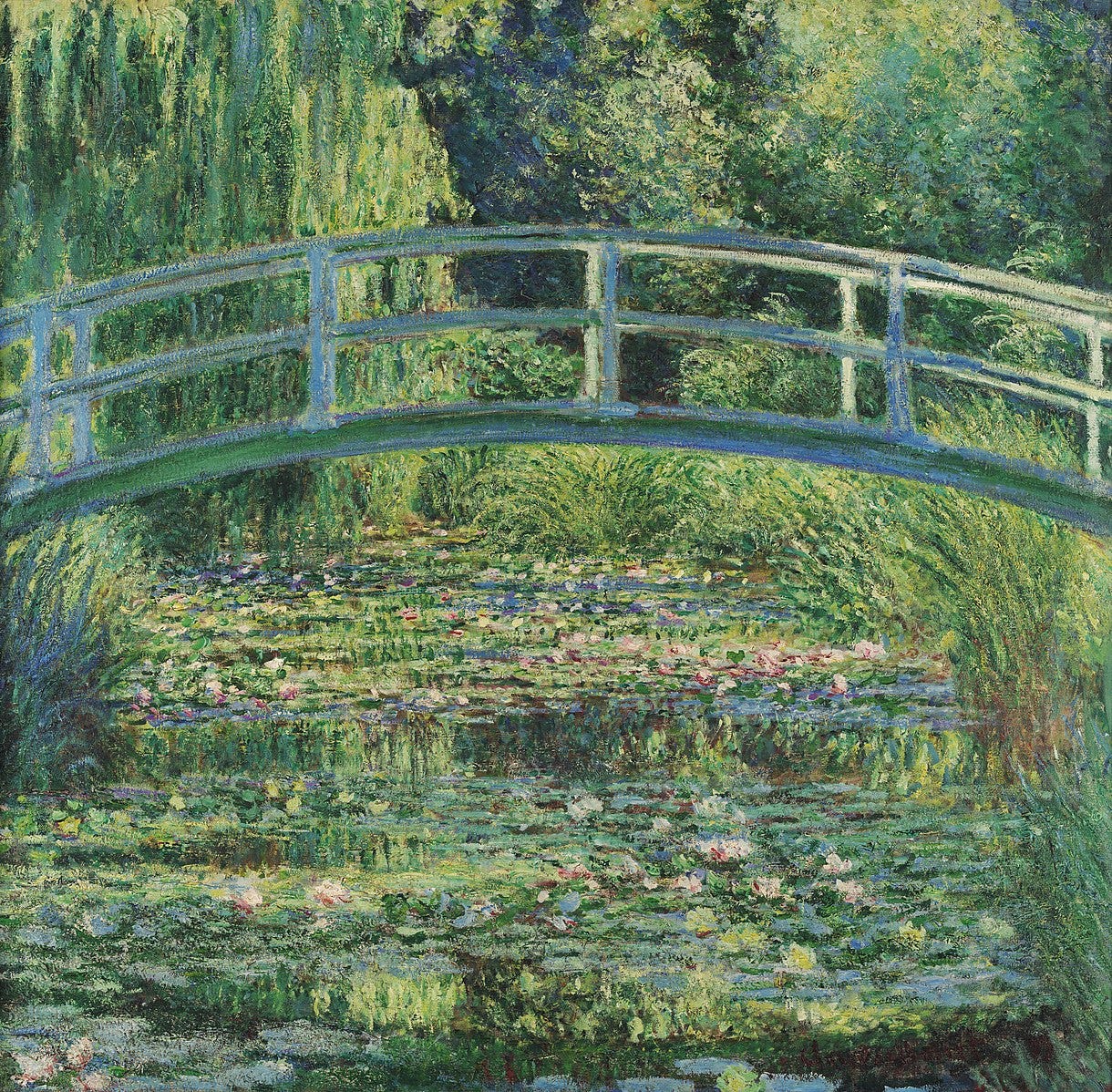
However, all of these early paintings are more distinctly figurative. While none of Monet’s paintings really qualify as abstract (since all were images of places and people he had observed in the real world), we will see in next week’s essay why his later Water Lilies would inspire the Abstract Expressionists of the mid-20th century.
Yet in all of his Water Lilies, Monet’s brilliant use of color stands out. By now, the artist was an expert in rendering subtle differences in shade and hue, what Christoph Heinrich calls a “mosaic of light.”4 The artist achieved this by starting with extremely thin layers of paint and building from there, such that the deepest layers gleamed through those on top. This technique allowed Monet to mimic both the depth and transparency of water, giving his canvases a life-like glow. Over time, the shorter brushstrokes in his earlier Water Lilies would give way to greater fluidity.
In the final installment of this series, we will turn to those later works, including the vast canvases displayed in the Musée de l’Orangerie, which was once part of the Louvre. What we’ll discover is the work of a painter who, for all his trials and tribulations, refused to become complacent even after achieving his dreams.
Related essays from The Crossroads Gazette:


Rewald, History of Impressionism, 489-490.
Christoph Heinrich, Monet (Taschen, 1994), 74.
Heinrich, Monet, 84.
Heinrich, Monet, 85.
We have yet to make it to Giverny but do wonder if it will be so overrun that it's better to enjoy it through his art!
🔥💯